The Hidden Health Risks of Essential Oil Diffusers: What the Science Really Shows
Scientific research reveals that the microdroplets created by essential oil diffusers can penetrate deep into lung tissue, trigger respiratory illness, and create secondary pollutants – even in healthy individuals
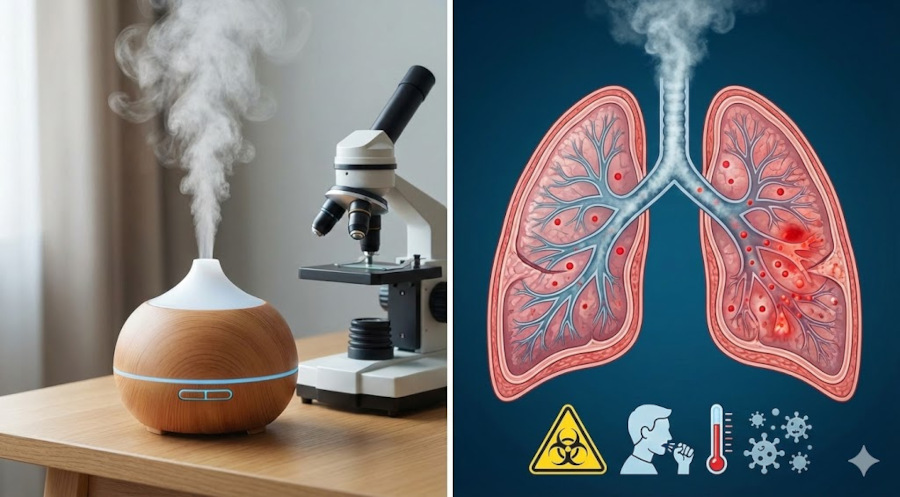
Essential oil diffusers (also commonly called aroma diffusers) have become ubiquitous in homes, offices, and wellness spaces, marketed as a natural way to improve air quality, promote relaxation, and even fight illness. However, a growing body of peer-reviewed scientific research paints a very different picture. The microdroplets these devices create can penetrate deep into lung tissue, trigger serious respiratory conditions, and generate secondary pollutants including formaldehyde – a known carcinogen.
This is not about fear-mongering or rejecting natural healing approaches. As a holistic practitioner, I understand the appeal of aromatherapy and the genuine benefits that essential oils can provide when used appropriately. However, the scientific evidence demands that we take a more critical look at how these devices work and what they actually release into our indoor environments – particularly for vulnerable populations including those with respiratory conditions, children, and pets.
Critical Research Findings:
• Ultrasonic diffusers create nano-sized particles (10-200 nm) that penetrate deep into lung alveoli
• PM2.5 concentrations from diffusers can exceed ambient air quality standards
• Essential oils emit 20-140 different volatile organic compounds (VOCs) per oil
• Terpenes react with indoor ozone to form formaldehyde, a known carcinogen
• Documented cases include acute eosinophilic pneumonia, hypersensitivity pneumonitis, and lipoid pneumonia
• The American Lung Association and French ANSES have issued warnings about diffuser use
• Essential oils are not regulated in the United States – no quality oversight exists
What makes this issue particularly complex is that the health effects can range from immediate respiratory irritation to chronic conditions that develop over time. The scientific community is increasingly recognizing that indoor air quality is a significant health concern, and essential oil diffusers – despite their “natural” image – contribute to indoor air pollution in ways that many users do not expect.
Article Contents
- How Essential Oil Diffusers Actually Work
- The Microdroplets: What Gets Released Into Your Air
- How These Particles Reach Your Lungs
- Volatile Organic Compounds: The Chemical Reality
- Secondary Pollutants: Formaldehyde and Beyond
- Documented Respiratory Illness Cases
- Vulnerable Populations: Who is Most at Risk
- Regulatory Gaps and Lack of Oversight
- Safer Approaches to Aromatherapy
- Conclusions and Recommendations
How Essential Oil Diffusers Actually Work
To understand why essential oil diffusers can pose health risks, we must first understand the technology behind these devices. The most common type – ultrasonic diffusers – uses high-frequency vibrations to break water and essential oil mixtures into extremely fine droplets that are dispersed into the air as a cool mist. This is fundamentally different from simply smelling a bottle of essential oil.
Ultrasonic diffusers typically operate at frequencies around 1.7-2.4 MHz, creating microscopic water droplets that carry both the essential oil compounds and any minerals present in the water. These droplets are so small that they remain suspended in the air for extended periods and can travel throughout an entire home through normal air circulation. The “mist” you see rising from a diffuser is visible precisely because it contains millions of these tiny particles.
Types of Essential Oil Diffusers:
• Ultrasonic diffusers (aroma diffuser): Use vibration to create fine water-oil mist – most common type, produces smallest particles
• Nebulizing diffusers: Disperse pure essential oil without water – highest VOC concentrations
• Heat diffusers: Use warming elements – can alter chemical composition of oils
• Reed/passive diffusers: Rely on evaporation – lower particle emissions but still emit VOCs
Active diffusers (ultrasonic and nebulizing) pose the greatest respiratory risk due to particle emissions
The key distinction is between passive diffusion (like smelling an open bottle or using reed diffusers) and active aerosolization. When essential oils are actively nebulized or ultrasonically dispersed, they create a fundamentally different exposure scenario. Instead of inhaling only the volatile compounds that naturally evaporate from the oil, users inhale concentrated microdroplets containing the full spectrum of oil components – including non-volatile compounds that would not normally be inhaled.
The Microdroplets: What Gets Released Into Your Air
Scientific chamber studies have precisely measured the particles released by essential oil diffusers, and the findings are illuminating. Research published in Indoor Air (2021) found that ultrasonic essential oil diffusers produce particles predominantly in the nano-size range – far smaller than most people realize.
Particle Size Measurements from Essential Oil Diffusers:
• Lemon oil: Dominant particle size 10-100 nm
• Lavender oil: Dominant particle size 50-100 nm
• Eucalyptus oil: Dominant particle size 10-50 nm
• Grapeseed oil: Dominant particle size above 200 nm
• PM1 emission rates: Up to 3 mg/hour depending on oil type
• PM2.5 concentrations can reach hundreds of μg/m³ – exceeding ambient air standards
To put these numbers in context, particles smaller than 2.5 micrometers (PM2.5) can penetrate deep into the lungs and even enter the bloodstream. Particles in the nano-range (below 100 nm) can deposit directly in the lung alveoli – the tiny air sacs where gas exchange occurs. The WHO air quality guideline for PM2.5 is 15 μg/m³ as an annual average. Studies have shown that operating an ultrasonic humidifier or diffuser with tap water can produce PM2.5 concentrations of 0.59 mg/m³ (590 μg/m³) – nearly 40 times the daily standard.
Research from Purdue University found that particle counts from ultrasonic diffusers ranged from approximately 2,000 to over 43,000 particles per cubic centimeter, depending on water quality and mineral content. These particle counts are comparable to those found in polluted urban outdoor air.
Why Particle Size Matters:
• Particles 10-30 μm: Deposited in nasal cavity and upper respiratory tract
• Particles 6-10 μm: Can reach small bronchial tubes
• Particles 1-5 μm: Can enter the lungs
• Particles below 2.5 μm (PM2.5): Can deposit in lung alveoli
• Particles below 100 nm: Can cross into bloodstream
Essential oil diffusers primarily produce particles in the most penetrating size ranges
How These Particles Reach Your Lungs
Animal studies have directly documented what happens when ultrasonic diffuser particles are inhaled. Research published in Particle and Fibre Toxicology exposed mice to aerosols from ultrasonic humidifiers and examined their lung tissue using electron microscopy. The findings were striking: particles with diameters of 100-200 nm were found deposited directly in the lung tissue and were actively being engulfed by alveolar macrophages – the immune cells responsible for cleaning debris from the lungs.
The study found that these particles penetrated deep into the lung tissue, with some particles as small as 20-60 nm found within intracellular vesicles inside macrophages. While the mice in this study did not show overt inflammation after short-term exposure (7-14 days), the researchers documented significant genetic changes in lung tissue, including dysregulation of genes related to cell adhesion, immune function, and endocytosis.
“The diameter of the particles deposited in the lung was mostly within the range of 100-200 nm, and dissolving particles with approximately 20-60 nm diameter were also found in intracellular vesicles in the macrophage.”
– Particle and Fibre Toxicology, 2013
The deposition of particles in the lungs follows well-established physical principles. Three main mechanisms determine where inhaled particles deposit: inertial impaction (larger particles collide with airway walls at bends), sedimentation (particles settle due to gravity in smaller airways), and diffusion (the smallest particles move randomly and can contact airway surfaces). The nano-sized particles from diffusers are primarily deposited through diffusion, allowing them to reach the deepest parts of the respiratory system.
Model predictions suggest that over an 8-hour exposure period, the mass of particles deposited in the human respiratory system can exceed 135 μg for a 1-3 month old infant and 600 μg for an adult – values that raise significant concern given what we know about the effects of particulate matter on respiratory health.
Volatile Organic Compounds: The Chemical Reality
Beyond the physical particles, essential oil diffusers are significant sources of volatile organic compounds (VOCs) – chemical gases that can have various effects on health. Research published in the Journal of Air Quality, Atmosphere & Health (2018) analyzed 24 popular essential oils and found that each emitted between 20 and 140 different VOCs.
Major VOCs Emitted by Essential Oil Diffusers:
• Terpenes: Linalool, eucalyptol, d-limonene, α-pinene, terpinene-4-ol
• Regulated chemicals: Acetaldehyde, acetone, methanol (all OSHA-regulated for occupational exposure)
• Concerning compounds: Toluene and benzene (from eucalyptus and lavender diffusion)
• Measured concentrations: Linalool up to 0.787 mg/m³, eucalyptol up to 0.856 mg/m³
• Total VOC increases: Significant elevation from background 0.09 ppm to 0.48 ppm during diffusion
The American Lung Association has specifically warned about VOC emissions from essential oils: “These highly concentrated and potent essential oils can emit volatile organic compounds (VOCs). The inhalation of VOCs commonly has negative effects on the respiratory system.” The organization notes that essential oils are not regulated in the United States, meaning there is no oversight ensuring quality or safety standards.
Dr. Neha Solanki, a pulmonologist at the Cleveland Clinic Asthma Center, has been quoted explaining that “diffused eucalyptus and lavender release terpene, toluene and benzene. We know that these compounds have respiratory side effects. For example, terpene can cause shortness of breath, chest tightness and wheezing.”
Research Finding: A 2007 study in Atmospheric Environment found that the antimicrobial activity of essential oils – often cited as a health benefit – could only be detected during the first 30-60 minutes after evaporation began. This means that continuous diffusion for the purpose of “air purification” is ineffective, while the VOC exposure continues.
Secondary Pollutants: Formaldehyde and Beyond
Perhaps the most concerning aspect of essential oil diffusion is what happens after the VOCs are released into indoor air. Terpenes – the primary chemical components of essential oils – are highly reactive compounds. When they encounter ozone (naturally present in indoor air from outdoor sources, printers, and other devices), they undergo chemical reactions that produce secondary pollutants.
Secondary Pollutant Formation from Essential Oil Diffusion:
• Formaldehyde: Known carcinogen and respiratory irritant – formed when terpenes react with ozone
• Secondary Organic Aerosols (SOAs): Ultrafine particles 30-130 nm in diameter
• Ozone required: Reactions occur even at low indoor ozone concentrations (17-21 ppb)
• Particle formation: Ultrafine particle concentrations can reach 34,000-200,000 particles/cm³
These secondary pollutants form continuously as long as terpenes and ozone are present together
A pivotal study published in Building and Environment (2012) examined aromatherapy workplaces in Taiwan and documented formaldehyde and secondary organic aerosol formation in real-world conditions. The researchers found that “formaldehyde and SOAs were generated through ozone-initiated reactions with the major constituents of essential oils (terpenes) in an environment with low ozone concentrations.” The study specifically noted that nano-sized secondary organic particles (30-130 nm) were present at significant levels during aromatherapy periods.
The French Agency for Food, Environmental and Occupational Health & Safety (ANSES) has issued specific warnings about essential oil diffusers, stating that these products “emit a number of airborne volatile organic compounds (VOCs)” and that “some of these VOCs may have irritant or sensitising properties, even when they are of natural origin.” ANSES emphasizes that essential oil diffusers “can therefore be an additional source of indoor air pollution.”
“Despite their potential to enhance mood and performance, pleasant odors diffused through essential oils may act as indoor air pollutants because they are chemical substances.”
– Environmental Science and Pollution Research, 2020
A comprehensive literature review published in Environmental Science and Pollution Research (2020) concluded that “essential oil-based products are significant sources of terpenes in indoor air, inducing a high exposure of occupants to terpenes” and that “indoor oxidants may induce homogeneous and heterogeneous reactions, resulting in secondary pollutants, such as formaldehyde and secondary organic aerosols.”
Documented Respiratory Illness Cases
Beyond laboratory studies, the medical literature contains documented case reports of serious respiratory illness directly attributed to essential oil diffuser use. These cases demonstrate that the risks identified in research studies translate into real-world health consequences.
Acute Eosinophilic Pneumonia
A case report published in 2022 described a 35-year-old Japanese woman who developed acute respiratory failure after starting aromatherapy with a lavender essential oil diffuser. She presented to the emergency department with dyspnea, cough, and fever two weeks after beginning daily diffuser use. Despite having no history of allergic disease, asthma, or other respiratory conditions, her oxygen saturation had dropped to 88% on room air.
Case Details – Acute Eosinophilic Pneumonia:
• Patient: 35-year-old woman, never smoker, no previous respiratory disease
• Exposure: Two weeks of daily lavender essential oil aromatherapy via diffuser
• Presentation: Oxygen saturation 88%, ground glass opacities on CT scan, pleural effusion
• Diagnosis: Acute eosinophilic pneumonia confirmed by bronchoalveolar lavage (55% eosinophils)
• Lymphocyte stimulation test: Strongly positive for botanical essential oil (432% stimulation index)
• Outcome: Resolved with steroid therapy after diffuser discontinued
Hypersensitivity Pneumonitis
A case presented at the CHEST medical conference described a 41-year-old woman with worsening cough, shortness of breath, and declining exercise tolerance despite treatment for other conditions. CT imaging showed diffuse centrilobular nodules consistent with hypersensitivity pneumonitis. Investigation revealed that peppermint and eucalyptus essential oils were the causative agents, and the patient’s condition improved after discontinuing diffuser use.
From the Medical Literature: “Hypersensitivity pneumonitis is caused by inflammation of the alveoli in the lung due to hypersensitivity to certain environmental antigens. Inhaling small particles is known to cause hypersensitivity and lung disease, and a similar mechanism is likely present with essential oils.” – CHEST Conference Proceedings, 2019
Exogenous Lipoid Pneumonia
A 2025 case report in Radiology: Cardiothoracic Imaging documented exogenous lipoid pneumonia in a 72-year-old man attributed to inhaled aerosolized essential oils. The condition mimicked lung cancer on imaging and required extensive workup before the correct diagnosis was made. The Cleveland Clinic lists essential oils as a potential cause of lipoid pneumonia alongside mineral oils and vaping products.
While some sources argue that pure essential oils cannot cause lipoid pneumonia because they are volatile rather than true lipids, recent case reports and institutional guidance indicate that chronic inhalation of aerosolized essential oils can indeed lead to this condition – particularly when oils are heated, mixed with carrier oils, or used in high concentrations over extended periods.
Vulnerable Populations: Who is Most at Risk
While even healthy individuals can experience adverse effects from essential oil diffusers, certain populations are at significantly elevated risk. Understanding these vulnerabilities is essential for making informed decisions about diffuser use in homes with vulnerable family members.
People with Asthma and COPD
The American Lung Association specifically warns that “individuals with respiratory conditions like asthma and chronic obstructive pulmonary disease (COPD) may be particularly susceptible” to symptoms from essential oil inhalation. Fragrance is officially listed by the CDC as a common asthma trigger, alongside tobacco smoke, mold, and air pollution. For people with pre-existing lung conditions, essential oil diffusers can trigger bronchospasm, exacerbate symptoms, and lead to emergency department visits.
High-Risk Groups for Essential Oil Diffuser Exposure:
• Asthma patients: Fragrances are CDC-listed asthma triggers; diffused oils can trigger attacks
• COPD patients: Damaged lung tissue is more susceptible to VOC irritation
• Children: Thinner skin, immature livers, smaller airways, higher breathing rates
• Infants: Maximum deposition occurs at smaller particle sizes; immature detoxification systems
• Cats: Lack liver enzymes to process phenolic compounds; can develop liver failure
• Birds: Highly sensitive respiratory systems; rapid respiratory rate
• Pregnant women: Some essential oils cross placental barrier; fetal effects unknown
Children and Infants
Children’s Hospital of Philadelphia warns that “overexposure to aerosols with essential oils in them can irritate the lungs, eyes and skin of young children, sensitive adults and even pets.” Children have thinner skin, less developed liver detoxification systems, higher breathing rates relative to body size, and smaller airways that are more easily obstructed. The Poison Control organization notes that children “have thin skin and immature livers, which might make them more susceptible to toxic effects than adults.”
Specific guidelines recommend avoiding peppermint diffusion around children under 6 years and eucalyptus around children under 10 years due to potential respiratory effects. Some essential oils, particularly those containing camphor, have been associated with seizures in young children.
Pets: Cats, Dogs, and Birds
Veterinary toxicologists have documented significant risks of essential oil exposure in pets. Cats are particularly vulnerable because they lack certain liver enzymes (glucuronyl transferases) needed to metabolize phenolic compounds found in many essential oils. The MSD Veterinary Manual notes that “active diffusers (eg, nebulizing or ultrasonic diffusers) emit microdroplets or particles of oil into the air” which “pose an extra risk beyond inhalation exposure, especially for cats and birds.”
Veterinary Guidance: Essential oils toxic to cats include tea tree oil, eucalyptus, citrus oils, peppermint, pine, wintergreen, and ylang ylang. Dogs are also at risk, though generally less sensitive than cats. Birds have extremely sensitive respiratory systems and should never be exposed to diffused essential oils. Clinical signs of toxicity include vomiting, lethargy, drooling, ataxia, and potentially liver failure or seizures.
Regulatory Gaps and Lack of Oversight
A fundamental problem underlying essential oil safety is the complete lack of regulatory oversight in most countries. The American Lung Association explicitly states that “essential oils are not regulated in the United States. This means there is no oversight of these products to ensure quality and we do not know exactly what is in each bottle, the concentration or contaminants.”
This regulatory vacuum means that consumers cannot reliably know the purity, concentration, or composition of the essential oils they purchase. Commercially available essential oils often contain undisclosed fragrance ingredients, synthetic compounds, and potential contaminants. Without standardized testing or certification requirements, even products marketed as “pure” or “therapeutic grade” may contain adulterants.
“Essential oils are not regulated in the United States. This means there is no oversight of these products to ensure quality and we do not know exactly what is in each bottle, the concentration or contaminants.”
– American Lung Association
The French ANSES has called for better consumer information and new research, noting that “few data are available in scientific literature concerning the health effects of essential-oil based sprays and diffusers.” The agency emphasizes “the need to undertake new independent studies on essential oils used alone or in combination, in order to better characterise the potentially harmful health effects in the short and long term.”
Safer Approaches to Aromatherapy
For those who wish to enjoy the benefits of aromatherapy while minimizing health risks, there are several evidence-based approaches that can significantly reduce exposure to harmful particles and VOCs.
Lower-Risk Aromatherapy Methods:
• Personal inhalers: Allow direct, controlled inhalation without dispersing oils throughout indoor air
• Passive reed diffusers: Release VOCs but do not create aerosolized particles
• Diluted topical application: With appropriate carrier oils (research safe dilution ratios)
• Aromatherapy baths: Mixed with milk or baking soda first to disperse properly
• Brief, well-ventilated use: Maximum 30 minutes in well-ventilated areas
• Distance from breathing zone: Keep diffusers away from sleeping areas and workspaces
If You Choose to Use a Diffuser
For those who choose to continue using diffusers, the following precautions can reduce – though not eliminate – the associated risks:
Limit diffusion time to 30-60 minutes maximum, followed by an equal or longer period without diffusion. Always ensure excellent ventilation during and after use. Never use diffusers in small, enclosed spaces or overnight in bedrooms. Keep diffusers out of rooms occupied by pets, children, or individuals with respiratory conditions. Use only high-quality oils from reputable sources (though note that quality claims are unverified due to lack of regulation).
Use the minimum amount of essential oil needed – more is not better and increases exposure to harmful compounds. Clean diffusers regularly to prevent bacterial and fungal growth. Never use essential oils that have oxidized or smell “off.” Consider using distilled or purified water to reduce mineral particle emissions.
Critical Advice: If you experience any respiratory symptoms such as coughing, wheezing, shortness of breath, or chest tightness during or after diffuser use, discontinue immediately and ventilate the area. Seek medical attention if symptoms persist. Always inform healthcare providers about essential oil exposure when seeking care for respiratory symptoms.
Conclusions and Recommendations
The scientific evidence is clear: essential oil diffusers are not the benign, health-promoting devices they are often marketed to be. They release nano-sized particles that penetrate deep into lung tissue, emit dozens of volatile organic compounds, and contribute to the formation of secondary pollutants including formaldehyde. Documented case reports demonstrate that these exposures can cause serious respiratory illness, including conditions that require hospitalization and steroid treatment.
This does not mean that aromatherapy has no place in holistic health practice. Essential oils have genuine therapeutic properties that have been recognized for centuries. However, the delivery method matters enormously. The aerosolization of essential oils through ultrasonic diffusers creates exposure patterns that are fundamentally different from traditional aromatherapy methods – and the health implications of this difference are now becoming clear.
Key Recommendations:
• Consider passive methods (personal inhalers, reed diffusers) as safer alternatives to ultrasonic diffusers
• Never use diffusers around people with asthma, COPD, or other respiratory conditions
• Keep diffusers away from children under 10 years and all pets, especially cats and birds
• If using diffusers, limit use to 30 minutes maximum in well-ventilated areas
• Be aware that “natural” does not mean “safe” – essential oils are concentrated chemical compounds
• Do not rely on diffusers for air purification – the antimicrobial effect is brief while the pollution persists
• Consult healthcare providers before using essential oils if you have any respiratory conditions
The goal of sharing this information is not to create fear but to promote informed decision-making. As practitioners and consumers interested in natural health approaches, we must be willing to critically examine the evidence – even when it challenges popular assumptions. True holistic health requires integrating the best available scientific understanding with traditional wisdom, not rejecting evidence that conflicts with marketing claims or personal preferences.
For those who have been using essential oil diffusers extensively and are now concerned, the good news is that the documented respiratory conditions typically improve after exposure stops. However, prevention is always preferable to treatment. By understanding the real risks associated with these devices, we can make choices that support genuine health and wellbeing.
Related Topic: Candles and Indoor Air Quality
Many people who use aroma diffusers also love burning candles – often assuming they create a cozy and harmless atmosphere. However, science reveals a more nuanced picture here as well: A Danish cohort study with over 6,700 participants examined the association between candle use and cardiovascular as well as respiratory events. Candle combustion releases pollutants similar to traffic emissions – including PM2.5, nitrogen dioxide, VOCs, and polycyclic aromatic hydrocarbons (PAHs).
A 2023 study published in Particle and Fibre Toxicology involving asthmatic subjects found PAH levels ten times higher during candle exposure compared to clean air. Paraffin candles in particular can release toluene and benzene when burned – both known carcinogens. Recent 2025 research (Scientific Reports) confirmed that PM2.5 concentrations from scented candles can far exceed air quality standards. Those concerned about indoor air quality should also critically evaluate their candle use – or consider alternatives such as beeswax or soy candles with shorter burn times and proper ventilation. For those who want to avoid combustion entirely: Himalayan salt lamps create warm ambiance without any pollutant emissions.
Scientific Sources and References
This article is based on peer-reviewed scientific research from authoritative sources including:
- Schwartz-Narbonne, H., Du, B., & Siegel, J.A. (2021). “Volatile organic compound and particulate matter emissions from an ultrasonic essential oil diffuser.” Indoor Air, 31(6), 1982-1992.
- Koda, A., et al. (2022). “Acute eosinophilic pneumonia following aromatherapy with essential oil.” Respiratory Medicine Case Reports. PMC9092961.
- Huang, H.L., et al. (2012). “Effects of essential oils on the formation of formaldehyde and secondary organic aerosols in an aromatherapy environment.” Building and Environment, 57, 120-125.
- Angulo Milhem, S., et al. (2020). “Does the ubiquitous use of essential oil-based products promote indoor air quality? A critical literature review.” Environmental Science and Pollution Research, 27(13), 14365-14411.
- Umezawa, M., et al. (2013). “Effect of aerosol particles generated by ultrasonic humidifiers on the lung in mouse.” Particle and Fibre Toxicology, 10, 64.
- Su, H.J., et al. (2007). “The effects of evaporating essential oils on indoor air quality.” Atmospheric Environment, 41(6), 1230-1236.
- CHEST Conference Proceedings (2019). “When Oil Meets Air: A New Cause of Hypersensitivity Pneumonitis.”
- Nematollahi, N., et al. (2018). “Volatile chemical emissions from essential oils.” Air Quality, Atmosphere & Health, 11, 949-954.
- American Lung Association (2024). “Essential Oils: More Harmful Than Helpful?”
- American Lung Association (2024). “Vaping Essential Oils: Hidden Health Danger You Need to Know About.”
- ANSES – French Agency for Food, Environmental and Occupational Health & Safety. “ANSES calls for vigilance concerning essential-oil based sprays and diffusers.”
- Cleveland Clinic Health Library (2025). “Lipoid Pneumonia: Causes, Symptoms, Types & Treatment.”
- Children’s Hospital of Philadelphia. “Aromatherapy for Children: What’s Safe and What’s Not.”
- MSD Veterinary Manual (2025). “Toxicoses From Essential Oils in Animals.”
- Poison Control. “Essential Oils: Poisonous when Misused.”