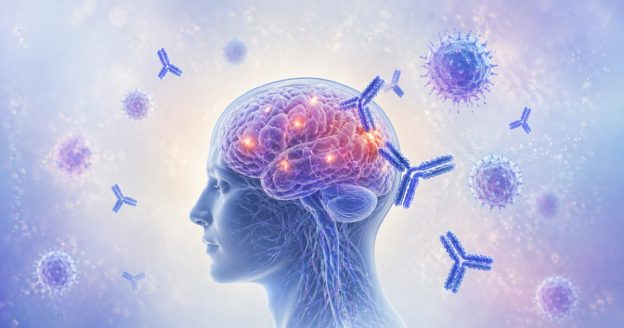
When the Immune System Attacks the Mind – Autoimmunity and Mental Illness
Antibodies mistakenly targeting the brain are linked to schizophrenia, OCD, depression, and dementia – and may be treatable with immune therapies rather than psychiatric drugs
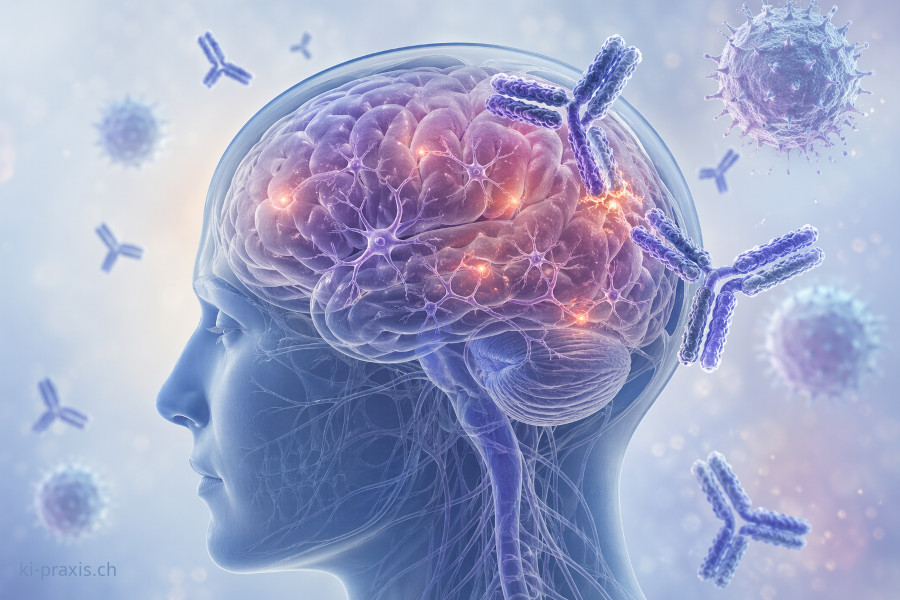
In 2007, neurologist Josep Dalmau and colleagues first described a condition called anti-NMDA receptor encephalitis – an autoimmune disorder in which the immune system produces antibodies that attack specific receptors in the brain, triggering a cascade of neuropsychiatric symptoms: psychosis, hallucinations, delusions, memory loss, movement problems, and in severe cases, coma. What made this discovery remarkable was not just the condition itself, but what it implied: that the immune system, when it misfires, can produce symptoms indistinguishable from schizophrenia and other serious mental illnesses. And crucially, that those symptoms can be reversed – not with antipsychotic drugs, but with immune therapies.
In the years since, a growing body of research has expanded the scope of this observation well beyond autoimmune encephalitis. The immune system, it is becoming clear, plays a role in mental illness that conventional psychiatry has barely begun to account for. This does not mean that most mental illness is autoimmune in origin – the evidence does not support that. But it does mean that a subset of people currently diagnosed with schizophrenia, depression, OCD, PTSD, and possibly dementia may be experiencing conditions driven in part by immune dysfunction – and may benefit from treatments that target the immune system rather than neurotransmitters alone. An April 2026 feature by Jamie Ducharme in New Scientist brought these developments to a wider audience and prompted us to look more closely at the emerging research.
How the Immune System Can Attack the Brain
The human immune system deploys a sophisticated arsenal – antibodies, T-cells, cytokines, and other molecules – to identify and neutralise foreign invaders such as bacteria and viruses. In autoimmune conditions, this system misfires: it turns these same weapons against the body’s own tissues. Every organ system can be affected by autoimmunity. The brain is no exception.
The best-understood mechanism in the context of psychiatry is the autoantibody – an antibody that binds not to a pathogen but to the body’s own proteins. In anti-NMDAR encephalitis, autoantibodies bind to NMDA receptors in the brain, which play a central role in learning, memory, and the regulation of mood and cognition. By blocking these receptors, the antibodies produce symptoms that closely mimic schizophrenia – psychosis, hallucinations, disorganised thinking – but which respond to immunotherapy rather than antipsychotics. The condition was initially described in young women with ovarian teratomas, but subsequent research has shown it affects both sexes across a wide age range.
Anti-NMDAR encephalitis is now the most commonly identified autoimmune encephalitis and the most frequent cause of autoimmune psychosis. But it is far from the only one. Since 2007, researchers have identified numerous other autoimmune encephalitides involving antibodies against different synaptic receptors and neuronal surface proteins – LGI1, GABA-B, AMPA, CASPR2, and others – each associated with overlapping but distinguishable clinical profiles. The broader picture emerging from this research is that the brain, like other organs, is a potential target of autoimmune attack, and that the range of psychiatric presentations that can result is wider than was previously appreciated.
The Overlap with Schizophrenia
The relationship between autoimmunity and schizophrenia specifically has been documented for decades – studies have long shown that people with schizophrenia are at elevated risk of autoimmune diseases and vice versa. But the discovery of anti-NMDAR encephalitis gave this link a concrete mechanism for the first time, and accelerated research into the question of how many people diagnosed with schizophrenia might actually have an autoimmune condition.
Belinda Lennox, a psychiatrist at the University of Oxford who leads a research group focused on autoimmune psychosis, has found that antibodies against neuronal targets are present in approximately 5-10 percent of people presenting with a first episode of psychosis – even when they do not meet the full criteria for autoimmune encephalitis. Her group is currently running the SINAPPS2 trial, a randomised placebo-controlled study testing whether IVIG (intravenous immunoglobulin) and rituximab – immune therapies already used in other autoimmune conditions – can improve outcomes for people with antibody-associated psychosis.
Thomas Pollak, a neuropsychiatrist at King’s College London who has worked extensively in this field, estimates that no more than 1 percent of people with acute psychosis have symptoms that are directly and concretely caused by antibodies producing full autoimmune encephalitis. But he frames the more important question differently: how many people with psychiatric diagnoses are experiencing some form of brain-related autoimmunity or neuroinflammation – even without identifiable antibodies? That number, he suggests, is likely considerably higher, and our current diagnostic tools may be missing much of it.
The diagnostic gap matters clinically. Autoimmune encephalitis can be treated – and people can recover fully. A 12-year-old girl in the UK died by suicide in 2023 after doctors failed to perform a lumbar puncture to test for the condition; a coroner’s jury found this failure possibly contributed to her death. The cases that reach neurologists with clear physical symptoms such as seizures and catatonia are, in Pollak’s words, “a wonderful diagnosis to be able to make” – because people can get better with relatively simple treatments. The problem is the cases that never reach a neurologist because the psychiatric presentation is the only visible feature.
Beyond Psychosis – OCD, Depression, PTSD, and Dementia
The implications extend beyond schizophrenia and acute psychosis. Researchers are increasingly finding associations between immune dysfunction and a range of other psychiatric conditions.
A small 2025 study found autoantibodies in the blood serum of 8 out of 20 veterans with both post-traumatic stress disorder and a history of traumatic brain injury. The sample is too small to draw firm conclusions, but the finding is consistent with a broader hypothesis: that neuroinflammation triggered by injury or psychological trauma may, in some individuals, set off an autoimmune cascade that sustains or worsens psychiatric symptoms.
Research into the possible autoimmune contributions to OCD, depression, and dementia is at an earlier stage. Neuroinflammation has been documented in depression through PET imaging and post-mortem studies, and elevated inflammatory markers correlate with treatment-resistant cases. Whether this inflammation is in part autoimmune – involving misdirected antibodies – remains an active area of investigation. In dementia, the amyloid hypothesis has dominated research for decades, but a growing number of researchers are exploring whether autoimmune processes contribute to neurodegeneration, at least in subgroups.
Christopher Bartley, who leads the Translational Immunopsychiatry Unit at the US National Institutes of Health, takes a broad view. He argues that focusing only on the autoantibodies currently known to cause encephalitis is too narrow an approach. The human body may theoretically produce an enormous variety of antibodies, and Bartley’s hypothesis is that many as-yet-unidentified autoantibodies may contribute to psychiatric symptoms. His lab has recently identified three novel autoantibodies potentially involved in psychosis, with a paper in preparation. Neurologists at the Charite-Universitatsmedizin Berlin have described several others.
The experimental logic is straightforward: if animals develop psychiatric symptoms when injected with cloned versions of a candidate autoantibody, and those symptoms disappear when the antibody is removed, that is strong evidence of a causal link – and a potential therapeutic target.
Treatment Implications
If a meaningful fraction of people currently diagnosed with psychiatric conditions have an underlying immune driver, the implications for treatment are significant. The current pharmacological toolkit of psychiatry – antipsychotics, antidepressants, mood stabilisers – works by modifying neurotransmitter systems. These drugs help many people, but they do not work for everyone. Up to a third of people with schizophrenia do not respond adequately to antipsychotic medication. For people in whom the root cause is immunological, this is not surprising – a drug that targets dopamine or serotonin cannot resolve a problem that originates in the immune system.
Immunotherapy, by contrast, directly addresses the underlying process. In established autoimmune encephalitis, treatments include plasmapheresis – a procedure that filters plasma containing harmful antibodies from the blood – as well as corticosteroids, IVIG, and rituximab. Germany, which has a national research network ensuring more systematic screening for these conditions, has more experience with these treatments in psychiatric settings than most countries.
Andrew Miller, a psychiatrist at the Emory University School of Medicine, has noted that existing immune drugs offer an advantage: they are already approved, their safety profiles are known, and they have established dosing protocols. The immunosuppressant methotrexate, already used for rheumatoid arthritis and psoriasis, is currently under investigation as a potential treatment for schizophrenia. The path to application in psychiatry does not require developing entirely new drugs – it requires correctly identifying who might benefit from existing ones.
Pollak and colleagues at the Francis Crick Institute, including psychosis researcher Katharina Schmack, are also investigating a more fundamental question: whether existing antipsychotic drugs may work partly by modulating the immune system, rather than – or in addition to – their known effects on neurotransmitter receptors. If so, this would further support the immune hypothesis and potentially explain why the drugs help some people but not others.
The argument is not that all mental illness is autoimmune, nor that immune therapies should replace established psychiatric treatments. The argument is more targeted: that a subset of people with apparent psychiatric diagnoses may have treatable immune conditions that are currently being missed – and that screening for these conditions, where feasible, should become standard practice. For that small fraction, the difference between the right diagnosis and the wrong one can be the difference between recovery and decades of unnecessary suffering.
The Screening Movement
The most ambitious current effort to act on this understanding is taking place in New York. Columbia University’s Stavros Niarchos Foundation Center for Precision Psychiatry and Mental Health, in partnership with the New York State Office of Mental Health, has launched a programme to screen every person in New York State’s long-term psychiatric hospital system – approximately 14 psychiatric centres housing around 3’000 patients – for autoimmune, metabolic, and genetic contributors to their psychiatric conditions. Initial blood tests, if positive, lead to further investigation including lumbar puncture. Those found to have identifiable immune conditions would then receive targeted treatments fundamentally different from standard psychiatric medication.
Steven Kushner, co-director of the SNF Center and a psychiatrist at Columbia, has noted that the percentage of patients who test positive may turn out to be small. But the stakes for those individuals are high enough to make the effort worthwhile. If even a fraction of people institutionalised for years with treatment-resistant psychiatric conditions turn out to have undiagnosed autoimmune encephalitis – or other immune-driven conditions not yet fully characterised – and can be treated and recover, the human cost of not screening becomes very difficult to justify.
Lennox has called explicitly for a culture change: all patients with acute-onset psychosis should be screened for autoimmune encephalitis, lumbar puncture should become a routine psychiatric investigation, and immunotherapy should be available for indicated cases. This position, once considered fringe, is gaining increasing institutional support as the evidence base grows.
A Note on Caution
This is a genuinely exciting area of research – but it comes with important caveats, which researchers in the field themselves emphasise. Pollak notes explicitly the danger of overcorrection: of attributing too many psychiatric presentations to immune causes and pursuing expensive, invasive, or side-effect-laden immune treatments in people for whom they have no basis. He has encountered patients who sold assets to fund immune treatments abroad after reading about autoimmune encephalitis online, in cases where he was convinced from the outset that this was not the diagnosis.
The field is also relatively young. Many of the studies are small. Some associations observed in research populations have not been replicated across independent cohorts. The mechanisms by which autoimmune processes might contribute to conditions like depression or PTSD are, for now, largely hypothetical. Rigorous randomised controlled trials – such as the SINAPPS2 study currently underway – are needed to establish whether immunotherapy produces genuine psychiatric benefit beyond the cases of clear autoimmune encephalitis where the evidence is already established.
The vision articulated by researchers like Pollak is not of an immune revolution that displaces psychiatry, but of a medicine that integrates immune and psychiatric approaches – identifying the right tools for the right patients, rather than applying one set of tools to everyone. “A smart future medicine,” as Pollak has put it, “is going to combine all of these different aspects at the same time.”
For most people with mental illness, the cause is not autoimmune, and existing psychiatric treatments remain the right approach. But for a subset – how large we do not yet know – the immune system may be playing a driving role that current diagnosis consistently misses. Finding those people, and treating them with the tools already available, represents one of the more promising frontiers in psychiatry today.
Disclaimer: This article is for educational and informational purposes only and does not constitute medical advice. If you or someone you know is experiencing symptoms of mental illness, please consult a qualified healthcare professional. If you are in crisis, please contact a crisis helpline in your country.
Sources and Further Reading
- Dalmau, J., et al. (2007). Paraneoplastic anti-N-methyl-D-aspartate receptor encephalitis associated with ovarian teratoma. Annals of Neurology, 61(1), 25-36.
- Lennox, B.R., et al. (2017). Prevalence and clinical characteristics of serum neuronal cell surface antibodies in first-episode psychosis: a case-control study. Lancet Psychiatry, 4(1), 42-48.
- Lennox, B.R., et al. (2019). Intravenous immunoglobulin and rituximab versus placebo treatment of antibody-associated psychosis: study protocol of a randomised phase IIa double-blinded placebo-controlled trial (SINAPPS2). Trials, 20(1), 331.
- Pollak, T.A., et al. (2020). The immune system in schizophrenia. npj Schizophrenia, 6(1), 12.
- Kayser, M.S., & Dalmau, J. (2016). Anti-NMDA receptor encephalitis, autoimmunity, and psychosis. Schizophrenia Research, 176(1), 36-40.
- Bartley, C.M., et al. (2023). Anti-CASPR2 autoantibodies are associated with psychosis. Brain, 146(8), 3413-3425.
- Bergink, V., et al. (2015). Autoimmune encephalitis in postpartum psychosis. American Journal of Psychiatry, 172(9), 901-908.
- Columbia University SNF Center for Precision Psychiatry and Mental Health. columbiapsychiatry.org
- Science.org (2024). An inflamed brain can trigger psychosis. The search is on for patients who might be cured. science.org
- Ducharme, J. (23 April 2026). How autoimmune conditions can unexpectedly drive mental illness. New Scientist. newscientist.com