Soy: Miracle Food, Risk Factor, or Both? A Balanced Look at the Evidence
History, industry marketing, nutrient absorption, and what current peer-reviewed research actually shows about one of the most contested foods on the planet
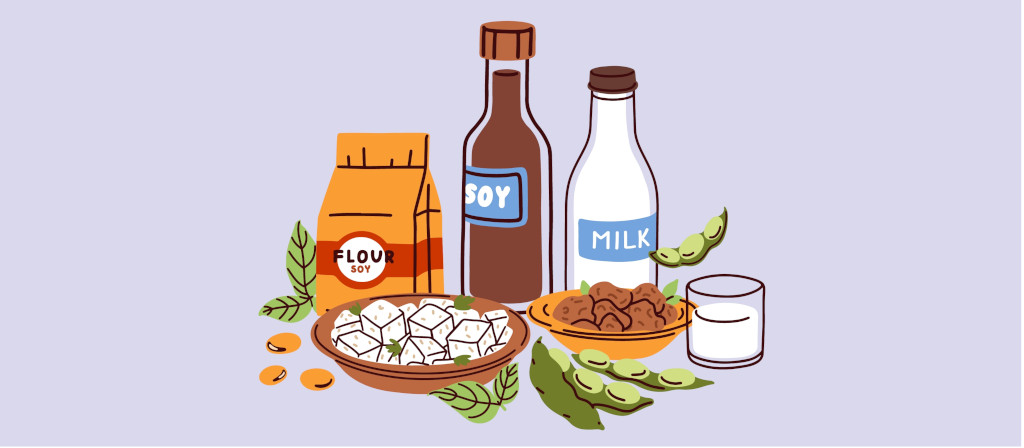
Few foods divide opinion as sharply as the soybean. To some, it is the plant-based miracle that protects against heart disease, cancer, and menopausal symptoms. To others, it is a hormonally active risk factor that can be especially harmful to children. Both camps cite studies – and both are partly right.
This article grew out of a closer, source-checked look at claims raised by nutritionist Dr. Kaayla T. Daniel in her book The Whole Soy Story: The Dark Side of America’s Favorite Health Food. Her work was instrumental in raising legitimate, still-relevant concerns about soy – particularly around infant formula and industrial processing – at a time when the food industry’s marketing of soy was almost entirely one-sided. Some of her claims have held up well against subsequent research; others have not. This article aims to separate the two.
Soy is neither the miracle food the industry has promoted since the 1990s, nor the blanket health risk it is sometimes portrayed as. The effect of soy – on cancer risk, thyroid function, fertility, and infant development – depends heavily on the product form, the dose, and the life stage of the person eating it. A single verdict on “soy” as a category does not hold up against the evidence.
Table of Contents
The History of Soy: From Soil Fertilizer to Tofu
The soybean was domesticated roughly 3,000 years ago in what is now northeastern China (historical Manchuria), from a wild climbing vine. Contrary to its modern reputation, it spent a long time not being primarily a food at all. Early soybeans were tough, bitter, and barely digestible because of their high concentration of protease inhibitors. Far more valuable was the plant’s effect on soil fertility: like all legumes, soy lives in symbiosis with Rhizobium bacteria that fix nitrogen from the air and deposit it into the soil. Historians generally agree that in this early period, soy’s main role was most likely as a green manure and rotation crop with millet or wheat, rather than as a food.
It took nearly 1,000 years before the Chinese found ways to actually unlock the bean’s nutritional value: first as soy milk, then as fermented seasoning pastes such as the early salty black beans, and eventually – probably during the Han dynasty (c. 25-220 AD) – as tofu. During the Zhou dynasty (1050-256 BC), soy was counted among the “five sacred grains,” but it ranked a distant fourth in popularity behind millet, rice, and wheat.
Even after this, soy remained in traditional East Asian cuisine exactly what it still is today: an ingredient used in small amounts – as a seasoning (soy sauce, miso), as a fermented protein source (natto, tempeh), or as a curd-like protein concentrate (tofu) – never as a daily staple in the volumes now found in Western soy drinks, bars, or meat substitutes.
How a Byproduct Became a Health Food
Large-scale soy cultivation in the United States began in the 1920s – but primarily as an oil crop and as a protein source for the livestock feed industry. The press cake left over from extracting soy oil (soy meal, and later soy protein isolate) was, for decades, essentially a byproduct of oil production, sold cheaply to hog, cattle, and poultry producers.
From the 1970s, and especially through the 1990s, the US soy industry – organized through bodies such as the American Soybean Association and later the United Soybean Board, funded through a mandatory levy on soybean farmers known as the “soy checkoff” – began systematically developing new markets for soy protein in human food. This included funding research, sponsoring scientific symposia, and distributing a dedicated newsletter, “The Soy Connection,” which by 1993 reached roughly 70,000 dietitians and nutrition professionals free of charge.
The campaign’s high-water mark came in 1999, when the US Food and Drug Administration approved an official health claim allowing food labels to state that soy protein may reduce the risk of coronary heart disease. What followed was a genuine stampede: soy protein began appearing in hundreds of new products almost overnight.
An important distinction for a fair assessment: that an industry funds its own research and outreach is a documented conflict of interest – though the same is true of the dairy, meat, and sugar industries. Stronger claims that specific doctors or scientists were individually “bought” are not something the available sources support with any rigor, and should be kept separate from the better-documented fact of industry-funded research and marketing.
The Overlooked Issue: Soy and Nutrient Absorption
One point from the broader anti-soy literature deserves its own section, because it is genuinely well-supported: several natural compounds in soybeans interfere with the body’s ability to absorb minerals and vitamins from food – not necessarily by damaging the gut, but by physically binding nutrients into forms the small intestine cannot take up.
Several natural compounds in soy interfere with nutrient absorption, each through a different mechanism:
- Phytic acid (phytate): Binds strongly to calcium, iron, and zinc, and to a lesser degree magnesium and potassium, forming insoluble complexes that pass through the gut largely unabsorbed. Also reduces the bioavailability of vitamins A, B12, D, and E from the same meal.
- Lectins: Can further interfere with the absorption of calcium, iron, phosphorus, and zinc. Some research also suggests lectins can bind to the cells lining the intestinal wall and affect gut permeability (sometimes referred to as “leaky gut syndrome”), though the strongest evidence for this comes from animal studies using isolated lectins rather than whole soy foods in humans. A related, more speculative theory about lectins from corn and wheat reaching the bloodstream via glucose syrup is discussed here: → Beware of Glucose Syrup! The Glycoprotein Syndrome.
- Saponins: Interfere with nutrient absorption more generally, though the mechanism is less precisely mapped than that of phytate.
- Protease (trypsin) inhibitors: Do not block mineral absorption directly, but interfere with the digestion of protein itself – relevant given that soy is so often marketed specifically as a protein source.
One nuance matters for a fair read of this: phytate’s inhibitory effect is largely per-meal rather than cumulative across the whole day – a phytate-rich breakfast mainly affects mineral absorption from that breakfast, not from dinner. The practical concern arises when phytate-rich soy foods become a daily, repeated dietary staple rather than an occasional, fermented condiment – which is precisely the shift that happened when soy moved from East Asian seasoning to Western protein substitute eaten at most meals.
This mechanism offers one possible, partial explanation for something doctors and nutritionists do sometimes encounter: people on diets that look nutritionally complete on paper, including a heavily plant-based or soy-rich diet, presenting with low iron, zinc, or calcium status without an obvious cause. Diet composition as a whole, not soy alone, determines whether this becomes clinically relevant, and individual cases require proper medical evaluation rather than assumptions drawn from general mechanisms like this one.
The traditional fix is fermentation, soaking, and sprouting, all of which substantially reduce phytate and lectin content – one more reason the distinction between traditional, fermented soy foods and modern, unfermented soy protein isolates matters so much throughout this topic.
The Good, the Bad, and the Ugly
The Good: traditional, fermented products
In miso, natto, tempeh, tamari, and shoyu, mold cultures or bacteria break down the hard-to-digest proteins and substantially reduce phytate, lectin, and protease-inhibitor content. This is fermentation’s clearest, best-established benefit. How fermented soy compares to unfermented soy on cancer risk specifically is considerably more mixed than often assumed – more on that in the “What Current Research Actually Shows” section below.
The Bad: industrially processed isolates
Soy protein isolate, textured vegetable protein, and hydrolyzed soy protein start from “defatted” soy flakes – the residue left over after the oil has been extracted, typically using hexane, a petroleum-derived solvent. Hexane is classified by the US Environmental Protection Agency as a hazardous air pollutant and by the CDC as a neurotoxin at occupational exposure levels (chronic high-level exposure in factory settings has been linked to peripheral neuropathy – numbness, tingling, and muscle weakness). The relevant question for food, though, is not occupational exposure but residue: how much hexane is left behind in the finished product. Here the regulatory picture is thinner than one might expect. The FDA does not set a limit for hexane residue in soy foods and does not require manufacturers to test for it; the EU, by contrast, set a 10 ppm limit for foods made from defatted soy in 2009. Independent testing has found hexane residues in commercial soy meal and soy grits in the range of 14-22 ppm – above what the EU would permit, though it is worth noting that no studies have established what level of chronic, low-dose dietary hexane intake, if any, poses a health risk; the toxicology here is genuinely understudied rather than clearly established as dangerous. Beyond the solvent question, the high-pressure, high-heat extrusion used to texture soy protein into meat-substitute form also reduces vitamin content and protein quality compared to the original bean. Solvent-free alternatives exist – mechanical (expeller) pressing and supercritical CO2 extraction – but remain less common because they’re more expensive and yield somewhat less oil per batch.
The Ugly: infants and young children
This is where caution is best supported by evidence. Soy infant formula delivers isoflavones at concentrations, relative to body weight, many times higher than what produces measurable effects in adults – during a developmental window when the hormonal system is especially sensitive to estrogen-like compounds. Documented concerns include possible premature puberty in girls, delayed puberty in boys, and significantly elevated manganese intake.
What Health Authorities Around the World Recommend
Several countries have issued specific recommendations or restrictions on soy, particularly around infant formula:
- Israel (2005): No soy infant formula; children under 18 limited to a maximum of three servings per week
- Germany: Warns against soy infant formula without a specific medical indication
- United Kingdom: The Committee on Toxicity found insufficient evidence of health benefit and advises caution with infant formula
- France (ANSES, March 2025): Set a toxicological reference value of 20 µg isoflavones per kg body weight per day for the general population, and 10 µg/kg for children before puberty, pregnant women, and women of reproductive age. ANSES additionally recommended that schools, hospitals, and workplace cafeterias avoid serving soy-based foods entirely – for all age groups
A striking detail behind the French recommendation: ANSES found that 76 percent of French children aged three to five already exceed this threshold through ordinary diet alone – a sign of just how widely soy has spread into foods where consumers would not expect to find it.
What Current Research Actually Shows
The active compounds at the center of the debate are isoflavones (mainly genistein and daidzein) – plant substances structurally similar enough to bind weakly to human estrogen receptors (phytoestrogens). The critical point: the same substance can act differently depending on life stage, in a manner conceptually similar to a selective estrogen receptor modulator (the same broad principle behind drugs like tamoxifen, only vastly weaker).
Thyroid: Several reviews confirm that isoflavones can inhibit thyroid peroxidase, an enzyme essential for thyroid hormone synthesis. The people most affected are those with pre-existing iodine deficiency or pre-existing thyroid conditions – with adequate iodine intake, the risk to the healthy general population is considerably smaller than commonly portrayed. Given how widespread mild iodine deficiency has become in Western countries in its own right, soy’s effect on the thyroid is best understood as one additional factor layered on top of an already-strained system, not as an isolated risk. More on the broader iodine picture here: → Iodine Deficiency – The Silent Return of a Solved Problem.
Cancer: Two distinct bodies of research are relevant here, and they shouldn’t be conflated. In the general population, a 2024 meta-analysis of 52 observational studies (published in Nutrients) found that higher consumption of soy products overall, tofu, and soy milk – none of them fermented – was associated with reduced cancer risk. Fermented soy showed a more mixed picture: as a broad category it leaned slightly toward increased risk, though not reliably so; miso soup and natto individually showed no clear association either way; and studies from China specifically found a clear increase in risk with high fermented-soy intake – plausibly linked to the higher salt content of products like miso and soy sauce (tofu itself isn’t salty and isn’t part of this fermented category) rather than to soy as such. Altogether, this suggests fermentation itself isn’t the deciding factor; salt intake and regional dietary patterns appear to matter more, and none of this is evidence that soy actively prevents cancer – these remain correlational findings from population studies.
A separate, more specific body of research concerns breast cancer survivors. A 2024 meta-analysis published in JNCI Cancer Spectrum found that higher soy isoflavone intake was associated with a 26 percent reduction in breast cancer recurrence – but this protective effect reached statistical significance only in postmenopausal women, not premenopausal women, and isoflavone intake showed no significant association with breast-cancer-specific mortality. A separate dose-response analysis found the recurrence benefit plateaued at around 60 mg of isoflavones per day, with no additional reduction at higher intakes. The main practical significance of this research is reassurance rather than recommendation: it counters the older theoretical concern, based on isoflavones’ weak estrogenic activity, that breast cancer survivors should avoid soy altogether – it does not establish soy as a cancer-prevention strategy for the general population.
Menopause: A 2025 meta-analysis in PeerJ found a significant reduction in menopausal symptoms with isoflavone intake – plausibly explained by phytoestrogens partially filling the receptor gap left by declining endogenous estrogen.
These findings sit in some tension with the documented risks in infants and in people with iodine deficiency – but that is not a contradiction, it is the central point of this article: the effect and risk of soy isoflavones depend heavily on hormonal status, life stage, and dose, not on a blanket “good” or “bad” label.
The Bottom Line
Soy is neither the miracle food the industry has promoted since the 1990s, nor the blanket poison it is sometimes portrayed as in parts of the alternative health world. Traditional, fermented soy products eaten in small, condiment-like amounts – as they have been across East Asia for centuries – appear, based on current evidence, to be neutral to beneficial for healthy adults. Industrially processed isolates eaten in large quantities, and soy-based infant formula for young children, are the areas where genuine caution is warranted.
Anyone wanting to limit soy should do so as an informed choice – not because “all soy is bad,” but with attention to the specific product form, their own life stage, and any existing thyroid or iodine issues. Parents weighing soy infant formula should talk to a pediatrician rather than relying on marketing claims from either side of the debate. Anyone with unexplained mineral or vitamin deficiencies, regardless of how soy-heavy their diet is, should raise this with a doctor rather than self-diagnosing the cause.
Disclaimer: This article is for general educational purposes and does not replace individual medical or nutritional counseling.
Sources and Further Reading
- Daniel, K.T. The Whole Soy Story: The Dark Side of America’s Favorite Health Food. New Trends Publishing, 2005.
- Jack, S. Soy Story: The History of the Soybean. Eating China. Online at eatingchina.com
- Shurtleff, W., and A. Aoyagi. History of the Soyfoods Movement Worldwide (1960s-2019) and History of Soy Nutritional Research (1990-2021). SoyInfo Center. Online at soyinfocenter.com
- CNN. 2017/2024. Soy foods: Healthy or not?
- Harvard T.H. Chan School of Public Health, Nutrition Source. Are Anti-Nutrients Harmful? Online at nutritionsource.hsph.harvard.edu
- Today’s Dietitian. 2023. Soy Antinutrients.
- Wang, C., K. Ding, X. Xie, et al. 2024. Soy Product Consumption and the Risk of Cancer: A Systematic Review and Meta-Analysis of Observational Studies. Nutrients 16(7): 986. DOI: 10.3390/nu16070986
- van Die, M.D., Bone, K.M., Visvanathan, K., et al. 2024. Phytonutrients and outcomes following breast cancer: a systematic review and meta-analysis of observational studies. JNCI Cancer Spectrum 8(1): pkad104. DOI: 10.1093/jncics/pkad104
- Luan, H., Q. Liu, Y. Guo, et al. 2025. Effects of soy isoflavones on menopausal symptoms in perimenopausal women: a systematic review and meta-analysis. PeerJ 13: e19715. DOI: 10.7717/peerj.19715
- Otun, J., E. Sahebkar, L. Östlundh, et al. 2019. Systematic Review and Meta-analysis on the Effect of Soy on Thyroid Function. Scientific Reports 9: 3964. DOI: 10.1038/s41598-019-40647-x
- ANSES (France). 2025. Avoid isoflavones on menus in mass catering. Online at anses.fr
- 2025. Debunking the myth: are soy isoflavones truly a public health concern? Frontiers in Nutrition.