
Ketogenic Diet and Mental Health: The Science of Metabolic Psychiatry
How brain energy metabolism may hold the key to treating schizophrenia, bipolar disorder, depression, and anorexia nervosa
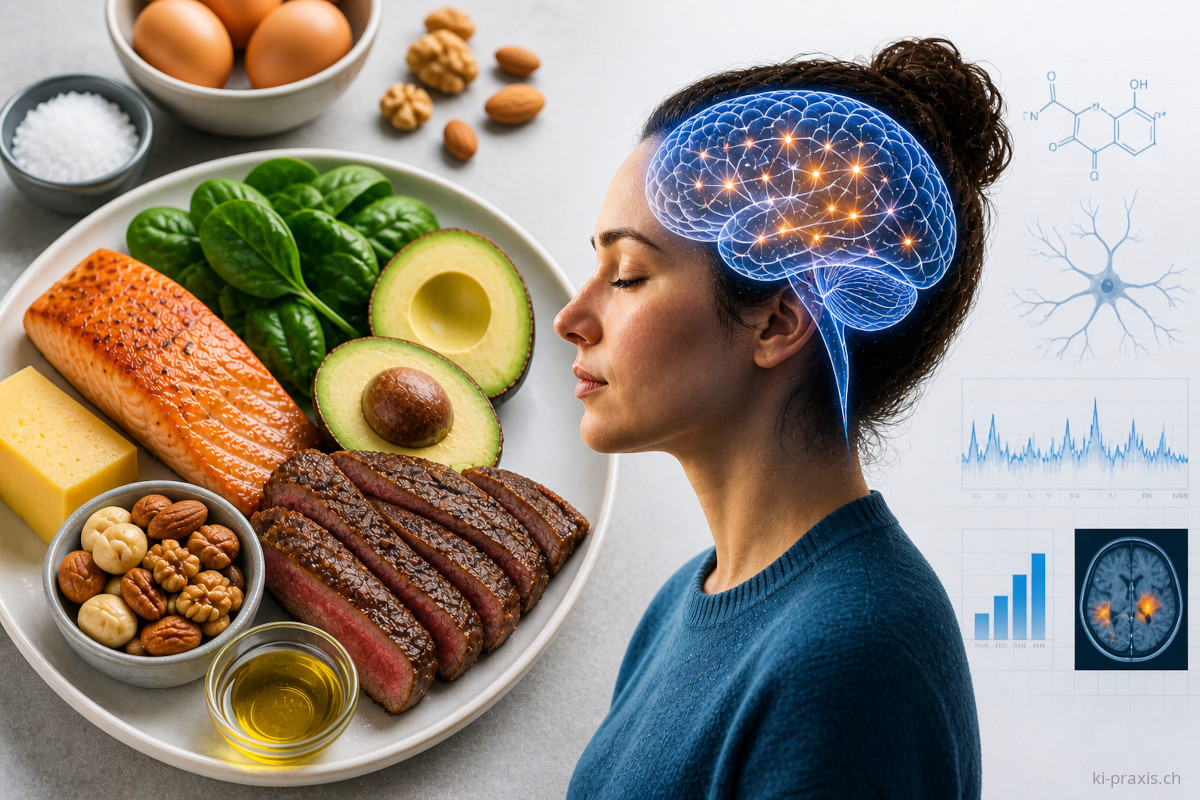
A high-fat, very-low-carbohydrate diet has been used to treat epilepsy for over a century. Now, a growing body of peer-reviewed research suggests it may also have measurable therapeutic effects in serious psychiatric conditions – including schizophrenia, bipolar disorder, severe depression, and even anorexia nervosa. The emerging field of metabolic psychiatry is beginning to offer a new framework for understanding why.
Table of Contents
- From Epilepsy to Psychiatry: A Century-Old Intervention Revisited
- The Metabolic Hypothesis of Mental Illness
- What Ketosis Does to the Brain
- Clinical Evidence: What the Research Shows
- An Unexpected Application: Anorexia Nervosa
- Ongoing Trials and the Research Horizon
- What This Does Not Mean
- A Paradigm in Formation
- Key Studies and Sources
From Epilepsy to Psychiatry: A Century-Old Intervention Revisited
The ketogenic diet was not developed as a weight-loss strategy. In 1921, Russell Wilder, a physician at the Mayo Clinic, formalized a high-fat, moderate-protein, very-low-carbohydrate diet specifically to mimic the metabolic state of fasting – a state long known to reduce epileptic seizures. He called it ketogenic because it drives the body to produce ketone bodies as an alternative fuel source when dietary glucose is scarce. Wilder’s initial paper demonstrated that this dietary shift reduced seizures as effectively as multi-day fasting, while being sustainable over the long term.
When anticonvulsant drugs arrived in the 1930s, the ketogenic diet fell out of mainstream use, surviving mainly as a last-resort intervention for drug-resistant pediatric epilepsy. Yet the fact that it worked – and worked reliably – implied that switching metabolic fuel sources corrects a fundamental dysfunction in brain function. Decades of subsequent research have begun to clarify what that dysfunction might be, and why the therapeutic signal may extend far beyond epilepsy.
The Metabolic Hypothesis of Mental Illness
The dominant model of psychiatric illness for the past half-century has focused on neurotransmitter imbalances – particularly dysregulation of dopamine and serotonin. This model has driven the development of most existing psychiatric medications. It has not, however, translated into consistently effective treatments for a significant proportion of patients, and it leaves major mechanistic questions unanswered.
Christopher Palmer, a psychiatrist at Harvard Medical School and director of the Metabolic and Mental Health Program at McLean Hospital, has proposed a different framework. In his 2022 book Brain Energy and in peer-reviewed publications including a 2025 paper in BJPsych Open, Palmer argues that mental disorders are fundamentally metabolic disorders of the brain, with mitochondrial dysfunction at their core.
Mitochondria are the organelles responsible for converting nutrients into ATP, the cell’s primary energy currency. But their role extends well beyond energy production. Mitochondria also regulate neurotransmitter synthesis, modulate inflammation, manage oxidative stress, and govern the precise electrochemical environment in which neurons operate. The brain is the body’s most energy-demanding organ, consuming approximately 20% of total energy supply despite representing only 2% of body mass. Any disruption to the efficiency of that energy supply has outsized consequences for brain function.
Evidence of mitochondrial dysfunction has been documented across a range of psychiatric conditions. Reduced activity of mitochondrial Complex I – a critical component of the oxidative phosphorylation chain – has been identified in post-mortem brain tissue from individuals with schizophrenia, bipolar disorder, and major depressive disorder, with distinct neuroanatomical patterns in each condition (Ben-Shachar & Karry, PLOS ONE, 2008). A 2025 narrative review in the International Journal of Molecular Sciences (Moren et al.) confirms that bioenergetic deficits in the oxidative phosphorylation system remain a consistent finding in schizophrenia pathophysiology across multiple levels of analysis.
The epidemiological picture reinforces this. People with serious mental illness carry substantially elevated risk of metabolic conditions including type 2 diabetes, obesity, and cardiovascular disease. Conversely, insulin resistance and metabolic syndrome significantly increase the risk of depression and cognitive decline. This bidirectional relationship points to shared underlying mechanisms rather than coincidence – and it is precisely that overlap that metabolic psychiatry is trying to exploit therapeutically.
What Ketosis Does to the Brain
When carbohydrate intake is reduced to approximately 5-10% of total calories, the liver converts fatty acids into ketone bodies – primarily beta-hydroxybutyrate, acetoacetate, and acetone. Unlike fatty acids, ketone bodies are water-soluble and small enough to cross the blood-brain barrier, where they can substitute for glucose as a neuronal fuel. This alternative pathway is more energetically efficient: per molecule, ketone oxidation yields approximately 27% more ATP than glucose metabolism, potentially correcting the energy deficit hypothesised to underlie psychiatric symptoms.
Beyond energy provision, ketone bodies exert several direct effects on brain function. One of the most significant involves the glutamate-GABA balance. Glutamate is the primary excitatory neurotransmitter; GABA is the primary inhibitory one. An excess of glutamatergic signalling relative to GABAergic inhibition is associated with epileptic seizures, psychotic states, and the kind of erratic neural firing implicated in mania. Multiple anticonvulsant medications used in psychiatry – for epilepsy, schizophrenia, and bipolar disorder alike – work in part by modulating this balance. Evidence from animal models suggests ketone bodies produce similar effects through direct enzymatic action. GABA also plays a central role in the transition to sleep – the same inhibitory pathway that quiets overactive neural firing is required to shift the brain into the resting state necessary for sleep onset. The relationship between brain metabolism, GABA activity, and sleep quality is explored in more depth in: → Sleep Disorders – Causes and Holistic Solutions.
Ketogenic diets have also been shown to reduce neuroinflammation, alter gut microbiome composition (suppressing pro-inflammatory, carbohydrate-fermenting bacterial populations), improve insulin sensitivity, and modulate gene expression related to oxidative stress. Each of these represents a recognised therapeutic target in psychiatric research.
Clinical Evidence: What the Research Shows
The clinical evidence base is still developing, and the field currently lacks large, double-blind, randomised controlled trials with long follow-up periods. What exists, however, is increasingly coherent.
Palmer published the first modern case reports of ketogenic diet use in psychiatric illness in 2017 and 2019, documenting symptom remission in patients with schizoaffective disorder and schizophrenia (Schizophrenia Research). One of those cases – a woman who had lived with treatment-resistant schizophrenia for more than 50 years – began the ketogenic diet for weight management reasons and achieved full psychiatric remission within months.
A 2022 retrospective analysis published in Frontiers in Psychiatry (Danan et al.) examined 31 adults with severe, treatment-resistant mental illness – major depressive disorder, bipolar disorder, and schizoaffective disorder – placed on a ketogenic diet (maximum 20 g carbohydrate per day) as an adjunct to inpatient psychiatric care. Of the 28 who adhered for more than two weeks, mean Hamilton Depression Rating Scale scores fell from 25.4 to 7.7 (p < 0.001), and Montgomery-Asberg Depression Rating Scale scores from 29.6 to 10.1 (p < 0.001). Among the ten patients with schizoaffective illness, PANSS scores showed significant improvement as well. The study had no control group, but the magnitude of the signal was notable.
In 2024, Stanford University published the first U.S.-based clinical pilot trial of a ketogenic diet for serious mental illness since 1965. Led by Shebani Sethi – the psychiatrist who coined the term “metabolic psychiatry” – the study followed 21 adults with bipolar disorder or schizophrenia who were taking antipsychotic medications and had co-occurring metabolic abnormalities. Participants followed a ketogenic diet – approximately 60% fat, 30% protein, 10% carbohydrate – for four months without caloric restriction. Results published in Psychiatry Research showed that 69% of participants with bipolar disorder achieved clinically meaningful improvement on the Clinical Global Impression scale, while those with schizophrenia showed an average 32% improvement on the Brief Psychiatric Rating Scale. Greater dietary adherence correlated with greater psychiatric benefit – a dose-response signal that strengthens the case for a causal relationship.
A parallel European pilot study, led by Iain Campbell and Daniel Smith at the University of Edinburgh and published in BJPsych Open (February 2025), enrolled 27 individuals with bipolar disorder in a 6-8 week dietary intervention; 20 completed the study. Using magnetic resonance spectroscopy (MRS) – an advanced neuroimaging technique measuring brain metabolite concentrations in vivo – the researchers documented an 11.6% reduction in glutamate-plus-glutamine concentration in the anterior cingulate cortex and a 13.6% reduction in the posterior cingulate cortex, both statistically significant. In participants providing daily self-assessment data, blood ketone levels correlated positively with mood and energy, and inversely with impulsivity and anxiety. Participants also lost an average of 4.2 kg and showed significant reductions in blood pressure. Lead author Campbell has publicly disclosed that he holds a personal diagnosis of bipolar disorder and manages it with a ketogenic diet – an unusual and widely noted dimension to an already significant publication.
An Unexpected Application: Anorexia Nervosa
Among the more counterintuitive findings in this field is the potential application of ketogenic diets to anorexia nervosa – a disorder characterised by severe food restriction. On the surface, recommending a highly restrictive eating pattern to someone already restricting seems clinically reckless. The reasoning behind current research is more nuanced, and it starts at the genetic level.
Genome-wide association studies by Cynthia Bulik and colleagues at the Karolinska Institute have identified that anorexia nervosa is associated with gene variants linked to impaired mitochondrial energy release. A model proposed by Guido Frank at the University of California San Diego, published in Frontiers in Nutrition (2024), suggests that in individuals with this metabolic vulnerability, severe caloric restriction may partly function as a self-generated ketogenic state – one that temporarily relieves anxiety by providing a more efficient alternative brain fuel. This could explain the well-documented paradox that many individuals with anorexia describe feeling mentally clearer and calmer when restricting, reinforcing the compulsion to do so.
If correct, a medically supervised ketogenic diet might allow those individuals to access the same neurochemical state – reduced anxiety, increased cognitive clarity – without the life-threatening weight loss. A 2022 pilot study by Calabrese, Frank and colleagues in Eating and Weight Disorders tested a combined therapeutic ketogenic diet and ketamine infusion protocol in five adults with chronic, weight-recovered anorexia who retained persistent eating disorder cognitions. All five completed the protocol without significant adverse effects. The original case patient on which the protocol was based remained in full remission 28 months later, having maintained the ketogenic diet and a healthy body weight.
The clinical consensus at this stage is unambiguous: ketogenic diets for eating disorders must only be explored in structured clinical settings with close medical and psychiatric supervision. Self-initiation carries serious risks in this population.
Ongoing Trials and the Research Horizon
Several large-scale randomised controlled trials are now underway. At the University of Edinburgh, Daniel Smith and Steven Marwaha (University of Birmingham) are leading a 200-participant RCT comparing a ketogenic diet with standard healthy eating guidelines in bipolar depression. At Stanford, Sethi’s group has registered a new RCT (NCT06748950) examining ketogenic metabolic therapy across schizophrenia, bipolar disorder, and major depressive disorder, with deep omic profiling to identify biological predictors of response. A 100-participant randomised controlled trial protocol for schizophrenia and bipolar disorder, co-authored by Palmer, Sethi, and colleagues, was published in Frontiers in Nutrition in 2024. McLean Hospital is also running a randomised trial targeting brain energy metabolism in first-episode bipolar disorder (NCT06221852).
The field has moved from isolated case reports to coordinated multi-site trials within a few years – an acceleration that reflects both the strength of the preliminary signals and the growing institutional recognition that metabolic mechanisms deserve serious investigation in psychiatry.
What This Does Not Mean
The evidence requires careful interpretation. Every clinical study conducted to date has been a pilot, a retrospective analysis, or a single-arm trial without an active control group. Confident attribution of effects to the diet alone, rather than to increased clinical attention, weight loss, or placebo response, is not yet possible. As Daniel Smith at Edinburgh has noted, it remains unknown what proportion of patients will respond substantially – the best-reported cases may represent a responsive subgroup, and identifying reliable biological predictors of response is a primary goal of the trials now underway.
The ketogenic diet also carries real clinical risks for certain populations, including those with hepatic or renal insufficiency, specific metabolic enzyme deficiencies, or cardiovascular conditions. The initial adaptation phase – commonly called “keto flu” – involves transient fatigue, headache, and mood fluctuation. In individuals on psychiatric medications, significant metabolic changes can affect drug metabolism and require monitoring. Long-term adherence is nutritionally demanding and requires attention to micronutrient status – particularly magnesium, electrolytes, and fat-soluble vitamins – which can shift significantly during sustained ketosis; most clinical trials have provided dietary coaching and health coach support as integral components of the protocol. For a detailed overview of nutritional considerations and supplement evidence, see: → Dietary Supplements – Benefits, Risks, and When They Actually Make Sense.
No researcher in this field recommends self-initiating a ketogenic diet as a substitute for psychiatric care. If validated by larger trials, ketogenic therapy would function as an adjunctive intervention – used alongside existing medications and therapies, not as a replacement.
A Paradigm in Formation
What metabolic psychiatry offers, at this stage, is less a proven treatment than a genuinely new conceptual framework – one that may help explain why psychiatric conditions so frequently co-occur with metabolic disease, why many existing psychiatric medications affect metabolic pathways, and why dietary and lifestyle factors produce measurable effects on mental health outcomes. If mental disorders are, at least in part, metabolic disorders of the brain, then intervening at the level of cellular energy metabolism is not a fringe idea. It is a logical therapeutic target with a century of mechanistic research behind it.
The ketogenic diet is a blunt instrument by pharmacological standards: it produces dozens of simultaneous metabolic changes, making it difficult to isolate which mechanisms drive which effects in which patients. But this complexity may also be part of its strength. If multiple convergent pathways produce the same therapeutic outcome, the signal may be robust enough to survive the individual biological variation that has made psychiatric drug development so consistently difficult.
Whether that signal holds under controlled trial conditions is a question the next five to ten years of research will begin to definitively answer.
Disclaimer: This article is for informational purposes only. Ketogenic dietary interventions for psychiatric conditions carry clinical risks and should only be undertaken under qualified medical supervision. If you or someone you know is living with a mental health condition, please consult a licensed healthcare professional.
Key Studies and Sources
Peer-reviewed studies referenced in this article:
- Palmer CM. The ketogenic diet and metabolic treatments for neuropsychiatric disorders. BJPsych Open, 2025. DOI: 10.1192/bjo.2025.50
- Sethi S et al. Ketogenic Diet Intervention on Metabolic and Psychiatric Health in Bipolar and Schizophrenia: A Pilot Trial. Psychiatry Research, 2024. DOI: 10.1016/j.psychres.2024.115936
- Campbell IH, Smith DJ et al. A pilot study of a ketogenic diet in bipolar disorder: clinical, metabolic and magnetic resonance spectroscopy findings. BJPsych Open, 2025. DOI: 10.1192/bjo.2024.841
- Danan A et al. The Ketogenic Diet for Refractory Mental Illness: A Retrospective Analysis of 31 Inpatients. Frontiers in Psychiatry, 2022. DOI: 10.3389/fpsyt.2022.951376
- Calabrese L, Frank GKW et al. Ketogenic diet and ketamine infusion treatment to target chronic persistent eating disorder psychopathology in anorexia nervosa: a pilot study. Eating and Weight Disorders, 2022. DOI: 10.1007/s40519-022-01455-x
- Frank GKW. Therapeutic ketogenic diet as treatment for anorexia nervosa. Frontiers in Nutrition, 2024. DOI: 10.3389/fnut.2024.1392135
- Longhitano C, Sethi S, Palmer C et al. Effects of ketogenic metabolic therapy on mental health and metabolic outcomes in schizophrenia and bipolar disorder: RCT protocol. Frontiers in Nutrition, 2024. DOI: 10.3389/fnut.2024.1444483
- Ben-Shachar D, Karry R. Neuroanatomical pattern of mitochondrial complex I pathology varies between schizophrenia, bipolar disorder and major depression. PLOS ONE, 2008. DOI: 10.1371/journal.pone.0003676
- Moren C et al. Mitochondrial oxidative phosphorylation system dysfunction in schizophrenia. International Journal of Molecular Sciences, 2025. DOI: 10.3390/ijms26094415